INDUSTRIES · SOCIAL HOUSING
Protect the staff who keep homes safe.
Lone-worker cover for operatives and officers, repairs-contractor control and depot asset tracking.
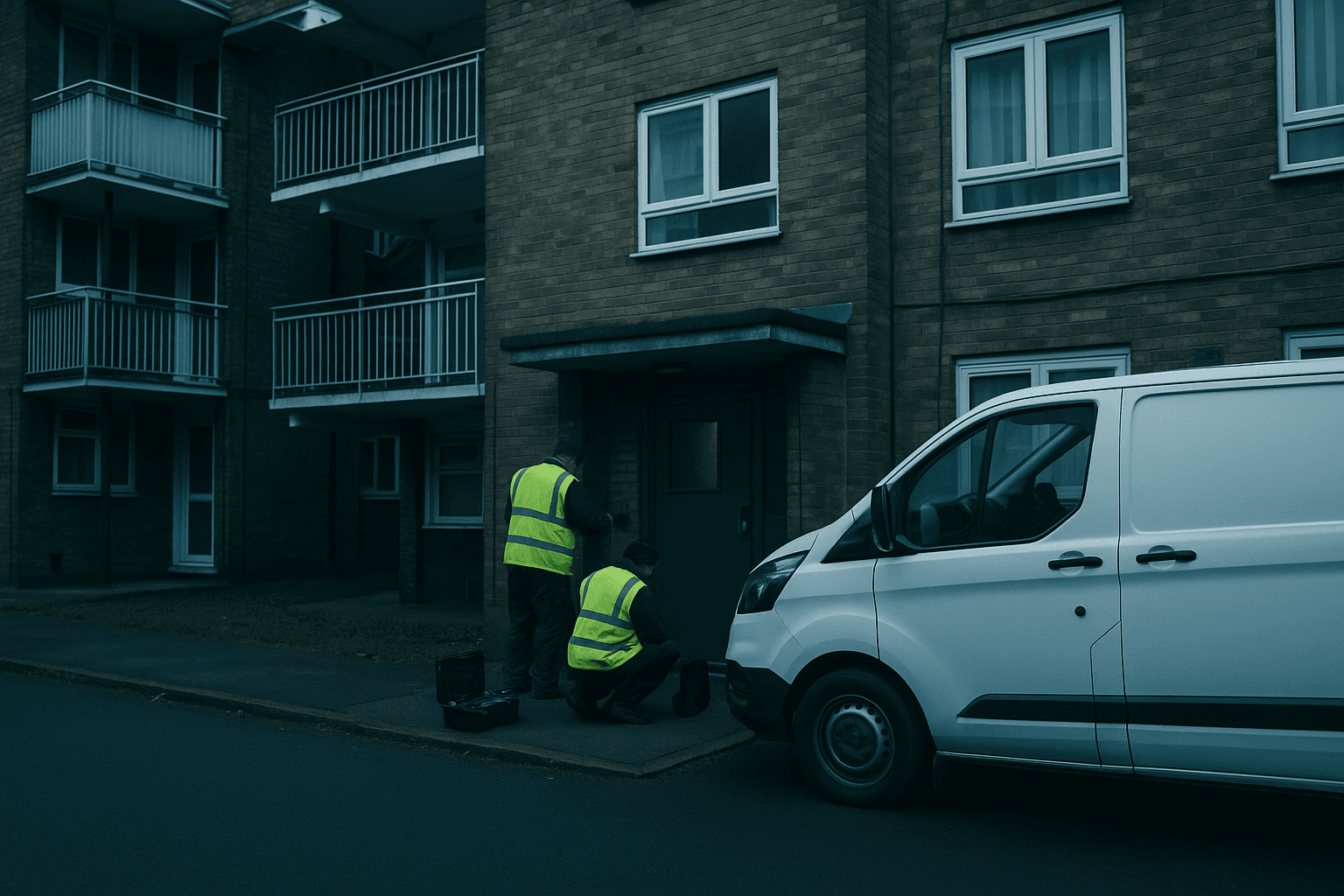
Housing officers, repairs operatives and surveyors spend their days alone in properties and communal blocks, sometimes facing aggression, sometimes in genuine danger, with no one who knows exactly where they are. Meanwhile landlords are under intense pressure to evidence that repairs are done, that contractors are who they say they are, and that high-rise buildings are safe. The Salvus Network gives every lone worker a safety tag that raises a located duress alert, controls and records which contractors are on site for repairs and maintenance, and tracks tools and plant across depots, so the people delivering safe homes are themselves kept safe and accountable.
Regulatory landscape
What the rules require.
The Regulator of Social Housing's consumer standards, in particular the Safety and Quality Standard, require registered providers to keep homes safe, to manage repairs effectively, and to hold accurate data about their stock and the work done to it. Providers must be able to evidence this, not just assert it. The Building Safety Act 2022 and the associated fire-safety regime place additional duties on higher-risk residential buildings, including managing safety risks in communal areas and keeping a clear record of who accesses them. Awaab's Law tightens timescales for acting on hazards such as damp and mould, which means proving that operatives attended and completed work matters more than ever. Underpinning all of this, the Health and Safety at Work etc. Act 1974 and the Management of Health and Safety at Work Regulations 1999 require the risks of lone working and violence to be assessed and controlled. The Salvus Network supplies the located duress cover, the contractor and access records, and the asset trail that let a landlord protect its staff and evidence its safety and quality obligations.
Where it’s used
Named use cases on social housing sites.
Lone-worker duress for officers and operatives
Housing officers, surveyors and repairs operatives carry a safety tag that raises a located alert if they are threatened or injured while alone in a property or block.
Repairs-contractor control
Verify that only inducted, authorised contractors are working on site, and hold a timestamped record of who attended which property and when, evidence for Awaab's Law timescales.
Communal-area access and safety
Control and log access to plant rooms, risers and communal areas in higher-risk buildings, supporting Building Safety Act duties with an auditable record.
Depot and tool tracking
Track tools, plant and vehicles across depots and stores, with an alert if kit leaves without authorisation, cutting loss and downtime.
How Salvus fits
The jobs that matter for social housing.
Asset Tracking
Asset tracking that flags unauthorised removals at the gate and surfaces idle or missing kit before it costs you.
Lone Worker Safety
Welfare monitoring that raises an alert when a worker stops moving or misses a check-in, before a bad day becomes a fatality.
Contractor Management
Induction verification and access gating that keep un-inducted contractors out of restricted zones automatically.
Tailored guides
The Salvus Network for social housing, by capability.
How we compare
Full coverage, not turnstiles.
| Capability | Manual process | Turnstile RTLS | The Salvus Network |
|---|---|---|---|
| Real-time head count | |||
| No choke points / turnstiles | |||
| Auditable muster record | |||
| Zone-level awareness | |||
| Lone-worker welfare alerts | |||
| Live in the first meeting | |||
| UK data residency + Cyber Essentials |
Frequently asked questions
Is The Salvus Network suitable for social housing sites?+
Yes. The Salvus Network is a complete, off-the-shelf solution built for social landlords and their depots and communal blocks. Safety Detection Points and safety tags give a live, auditable picture of where people were last detected, without turnstiles or manual sign-in.
How does Salvus support compliance for social housing operators?+
It supplies the located duress cover, contractor and access records and asset trail that help evidence the Regulator of Social Housing's Safety and Quality Standard, Building Safety Act 2022 duties for higher-risk buildings, and Awaab's Law timescales for attending hazards.
What does the salvus network address on a social housing site?+
Officers, surveyors and operatives work alone in properties and communal blocks, sometimes facing aggression. The platform provides located lone-worker duress, repairs-contractor control and depot asset tracking.
Can we see the salvus network running before we commit?+
Yes, a guided live walk-through shows the platform in action, and you can see the operator console working in the first meeting.
Book a live evacuation demo
A guided live walk-through of what the platform can do.