20 July 2026
Accounting for a ward: evacuation and assurance in hospitals
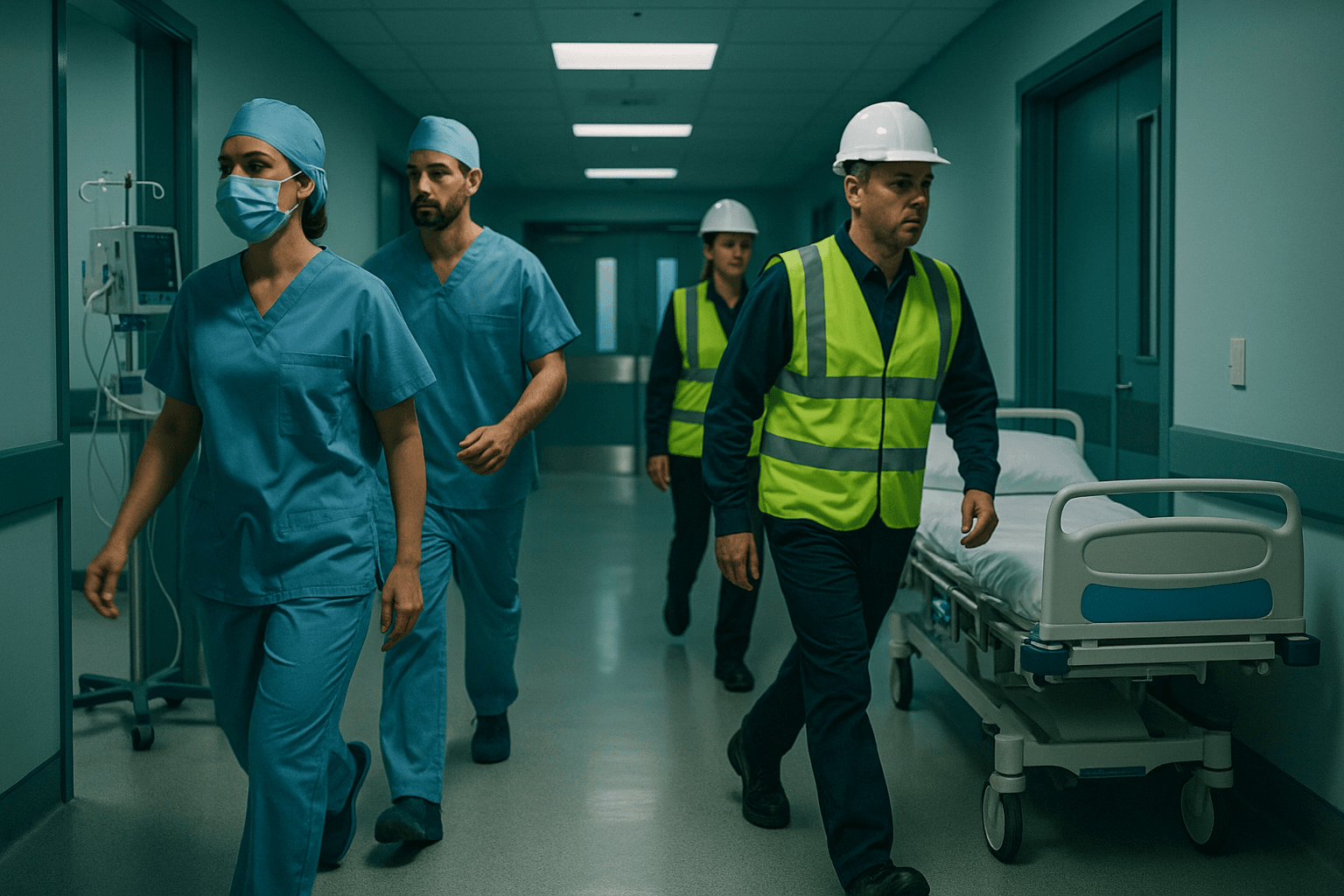
Hospital evacuation is uniquely difficult because many patients cannot self-evacuate and the usual approach is progressive horizontal evacuation, moving people to a safer compartment on the same floor. Accounting for staff, patients and critical equipment at each refuge, in real time, supports fire-safety duties under the Fire Safety Order 2005 and the audit trail CQC assurance depends on.
Why hospital evacuation is different
In most workplaces, the alarm means everyone leaves the building. In a hospital, moving a ventilated or post-operative patient outside can be more dangerous than the fire. So the norm is progressive horizontal evacuation: move people through fire-resisting compartments to a safer area on the same level, and only escalate if needed.
That makes the head count far harder. You are not counting people at one assembly point outside; you are tracking who has reached which refuge, while clinical care continues.
Accountability at each refuge
The Salvus Network detects staff, and tagged equipment such as beds, pumps and monitors, at Safety Detection Points across wards, departments and refuges. When a ward is cleared, charge nurses and fire marshals see a live count at each refuge rather than a manual bed-by-bed check.
The same reads help on an ordinary day, finding the shared infusion pump or wheelchair that clinical staff would otherwise spend hours hunting for.
Supporting CQC assurance
The Care Quality Commission's safe and well-led questions expect providers to protect people from avoidable harm and to have credible emergency arrangements, evidenced rather than asserted. A serious-incident review will ask who was where, and whether the response worked.
A timestamped record of an evacuation, alongside duress cover for lone clinical staff and managed equipment, is exactly the kind of documented assurance inspections and reviews look for.

Robin Hind
Managing Director, Res.Digital
Robin Hind is Managing Director of Res.Digital, the technology company behind The Salvus Network. He leads the team building the platform and works directly with the industrial, construction and high-risk sites that use it to account for their people, assets and emergency response in real time.
Connect on LinkedInBook a live evacuation demo
A guided live walk-through of what the platform can do.